


Bitcoin Depot is the largest operator of crypto ATMs globally and in the United States, with approximately 8,700 kiosks in the US and 9,200 worldwide.
Bitcoin Depot hacked for $3.67 million
Bitcoin ATM operator Bitcoin Depot has disclosed a March 23 hack in which attackers stole 50.903 BTC (~$3.67 million) from company wallets. According to the company's disclosure with the SEC, the exploiters gained access to the company's IT systems and wallet credentials, allowing them to steal the assets.
- SEC Form 8-K filed by Bitcoin Depot Inc. on April 6, 2026
- Top Crypto ATM Operators, Coin ATM Radar
Drift exploited for $285 million

The Solana-based Drift defi perpetual futures exchange was exploited for $285 million. The project alerted the community on social media, writing: "Drift Protocol is experiencing an active attack. ... This is not an April Fools joke."
The project later described the exploit as "a novel attack involving durable nonces, resulting in a rapid takeover of Drift's Security Council administrative powers." Once the attacker had access to admin capabilities, they quickly eliminated risk management limits on the protocol and drained huge quantities of tokens, which they swapped to USDC and then ETH. The attack was attributed to extremely sophisticated social engineering, likely by North Korean hackers.
Some have criticized USDC's issuer, Circle, for not freezing the stolen funds during the six hours they were held in USDC. Unlike ETH, USDC is controlled by a centralized company that can, and regularly does, freeze assets determined to have been stolen or connected to illicit activity.
The theft is among the largest in defi history.

Moonwell faces $1 million governance attack

The Moonwell lending protocol faced a governance attack on its deprecated Moonriver instance that could have drained $1 million from the project. Because Moonwell's MFAM governance token trades at fractions of a cent, an attacker was able to accumulate around 40 million tokens, submit a malicious proposal, and achieve quorum. Moonwell governance token holders scrambled to vote down the proposal before the voting ended on March 27.
Ultimately, facing being outvoted, the attacker dumped their MFAM holdings and the proposal was canceled as their balance had fallen below the proposal threshold.
This was only the most recent of Moonwell's troubles after the protocol suffered a $1.78 million loss in February due to an oracle misconfiguration and a $3.7 million loss in November 2025.
- Attack proposal, Moonwell governance [archive]
- Tweet thread by Blockful [archive]
Balancer Labs shuts down after $110 million hack

After a November 2025 exploit in which $110 million was drained from the Balancer defi protocol, the company behind the project has announced it will shut down. Besides the massive loss, the hack also caused users to flee the protocol, and Balancer's total value locked quickly plummeted from around $775 million to around $300 million. It has continued to decline since, now hovering around $150 million.
Balancer co-founder Fernando Martinelli has said he strongly considered shutting down the protocol entirely, but ultimately decided to continue the project as it generates a relatively small amount of revenue. Instead, the project will move to being operated by a DAO and operating company, which Martinelli hopes will allow them to dodge "real and ongoing legal exposure" and "the liability of past security incidents".
Although another Balancer co-founder has optimistically presented this as "the start of a better chapter" for Balancer, it remains to be seen whether a skeleton crew will be able to revive the project.
USR stablecoin depegs in $24 million exploit

The Resolv USD stablecoin, also known as USR, lost its intended dollar peg and dropped to around $0.14 after an exploiter was able to mint and sell tens of millions of unbacked tokens. USR is an asset-backed stablecoin that uses cryptoassets like bitcoin, ETH, and other stablecoins as collateral.
An exploiter took advantage of a flaw in USR's minting code to create tens of millions of USR tokens without depositing any assets to back them. The attacker then sold the unbacked USR, crashing the stablecoin's price to as low as $0.14. The attacker has profited at least 11,400 ETH (~$24 million), though they are still selling.
Some defi protocols paused USR-exposed strategies to avoid downstream impacts. Resolv issued a statement that the token's collateral pool was unaffected, though this is likely little comfort for those who purchased the unbacked USR.
Venus Protocol accumulates $2.15 million in bad debt after exploit

The BNB Chain's Venus Protocol lending protocol accumulated $2.15 million in bad debt after an exploiter manipulated the price of the Thena protocol's THE token. THE had very low liquidity, and the exploiter took advantage of it to manipulate the THE price oracle by borrowing against THE, using the borrowed funds to buy more THE, and repeating — causing the price oracle to reflect higher and higher prices. The attacker was able to avoid a supply cap on Venus by "donating" the funds rather than depositing them in the standard way.
While the exploit left the Venus Protocol with over $2 million in bad debt, it's not clear if the attacker even made money from the exploit. The exploiter's position was ultimately liquidated, collapsing the increase in THE price. However, it's possible the exploiter took advantage of the price discrepancy elsewhere to profit.
The Venus Protocol has had a number of issues in the past — notably in June 2023, when the team developing the BNB Chain had to intervene when the a thief borrowed $150 million on Venus against stolen tokens and then faced liquidation.
BlockFills goes bankrupt

Approximately a month after halting deposits and withdrawals, citing liquidity issues and "recent market and financial conditions", the American crypto lender BlockFills has filed for bankruptcy. Filings in Delaware bankruptcy court reveal the company has between $50 million and $100 million in assets and between $100 million and $500 million in liabilities. The list of creditors include customers like 007 Capital and Artha Investment Partners, and the firm has a $4.75 million loan outstanding to fellow crypto lender Nexo. Also on the list of creditors are the Chicago Blackhawks, with whom BlockFills signed a sponsorship deal in 2022.
BlockFills was backed by investors including Susquehanna and CME Ventures.
- Chapter 11 Voluntary Petition, Reliz Technology Group Holdings Inc.
Trader loses almost $50 million in Aave swap gone wrong

A trader using the Aave interface attempted to swap $50 million USDT for AAVE. However, due to the enormous size of the order, the purchase had dramatic impact on the aave price. The Aave interface warned the customer about the price impact, and the trader clicked a checkbox to accept the order terms. Ultimately, they received only 324 AAVE (~$37,600) in return for their $50 million, losing 99.9% of their assets in the process.
The Aave founder offered to refund the user the $600,000 in fees collected from the transaction, and acknowledged "there are additional guardrails the industry can build to better protect users".
$26.9 million erroneously liquidated on Aave after Chaos Labs oracle bug
Users of the Aave defi lending protocol who had borrowed from the wstETH/stETH pool suffered erroneous liquidations when a price oracle from Chaos Labs reported an inaccurately low price ratio between the two assets. The oracle bug caused some loans to report that they were below the required "health factor" (the ratio between the assets loaned and the amount of collateral provided by the borrower), triggering forcible liquidations across the platform amounting to $26.9 million.
Chaos Labs, presumably embarrassed to have lived up to its name, promised to reimburse users whose positions were improperly liquidated.
Thief pilfers NFTs priced at $230,000 from Gondi

A thief exploited a smart contract belonging to the Gondi NFT platform to steal 78 NFTs priced at $230,000. Perhaps the most shocking part of the theft is that the attacker managed to find NFTs still holding any value at all. Around half of the stolen NFTs were taken from a single wallet.
According to Gondi, the exploiter took advantage of functionality that allowed users to sell their NFTs to automatically repay loans.
Gondi has said it has reimbursed customers by buying them "comparable items" from the same collections as their stolen NFTs, although it seems questionable that this will satisfy customers who purchased products whose whole selling point is that they aren't interchangeable.
Solv Protocol exploited for $2.7 million

The Solv Protocol bitcoin defi lending and staking platform disclosed an exploit that they said affected fewer than ten users, but nevertheless netted the attacker 38 SolvBTC (a wrapped bitcoin token priced at $2.7 million). Although Solv has not disclosed specifics of the attack, some researchers have suggested it was a bug in the protocol's burn and mint functionality.
Returned crypto stolen again from Korean authorities
After a thief drained a crypto wallet of 4 million PRTG (notionally priced at $4.9 million, but highly illiquid) after blundering Korean tax officials posted the wallet's seed phrase to social media in a photo among other seized items, the thief returned the assets. However, the tokens were quickly stolen again by a second thief, as they'd been returned to the same vulnerable wallet. The first thief turned themselves in and was arrested by Korean law enforcement shortly after taking the funds; the second thief has not been identified.
Crypto stolen from Korean authorities after they post wallet seed phrase
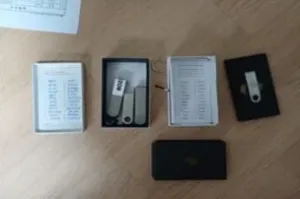
When Korean authorities posted a photograph of seized cash and other items from a police raid, they included photos of cards containing crypto wallet seed phrases, which were proudly arranged on the table next to Ledger hardware wallets for the photo op. Because it only takes a seed phrase to gain control of a crypto wallet, someone who saw the press release quickly acted to move around 4 million PRTG tokens from the wallet. The tokens are notionally worth $4.9 million, although the token is not highly liquid.
The blunder was likely due to the authorities' lack of knowledge about cryptocurrency. The move was somewhat akin to authorities publicly posting a username and password for a criminal's bank account — though that would likely be an easier mistake to unwind.
- "$4.8M in crypto stolen after Korean tax agency exposes wallet seed", Bleeping Computer [archive]
Step Finance, SolanaFloor, and Remora Markets shut down after January hack

Step Finance announced that, following a $30 million theft in late January, the project would be shutting down. Along with it, they will shut down SolanaFloor — a Solana-focused media project — and Remora Markets — a Solana-based tokenized stocks platform.
According to Step Finance, "we explored every possible path forward, including financing and acquisition opportunities. Unfortunately, we were unable to secure a viable outcome and have made the difficult decision to end all operations effective immediately."
In reply to Step Finance's announcement, crypto investor Mike Dudas claimed that the project had contacted him about bridge financing, but that Step had never responded to his request for more information about the hack. "i responded: 'would need to see the security post mortem before i could consider investing here' <crickets>"
YieldBlox lending pool drained of $10.2 million

A lending pool operated by YieldBlox on the Stellar blockchain was emptied of around $10.2 million in an oracle manipulation attack on the Reflector oracle supplying prices for the USTRY/USDC market. Reflector has said that there was no flaw with their oracle, and that market illiquidity caused the problem. "Reflector quoted correct prices. ... but it's impossible to quote adequate prices for a market fully handled by a single market-maker with almost zero trading activity."
The attacker was able to manipulate the oracle price to show that USTRY was priced at $100 (rather than its actual trading price of around $1.05). Then, they borrowed against the overvalued asset, withdrawing XLM and USDC priced at $10.2 million. However, around 48 million of the stolen XLM (~$7.2 million) were frozen.
IoTeX bridge exploited for $2 million after private key compromise

IoTeX, a platform to connect IoT devices to blockchain networks, lost around $2 million after a private key compromise enabled an attacker to drain funds from the project's token safe. Initial loss estimates were as high as $8.8 million, although IoTeX CEO Raullen Chai stated that the actual loss was closer to $2 million.
Blockchain security researcher Specter has suggested there may be links between this attack and a $50 million theft from the Infini "stablecoin neobank" a year ago.
Goliath Ventures CEO charged with running $328 million Ponzi scheme
Federal authorities arrested Christopher Alexander Delgado, the CEO of Goliath Ventures (previously Gen-Z Ventures). According to the charging documents, what Delgado presented to prospective investors as a way to earn returns via crypto liquidity pools was actually a Ponzi scheme, where investors' money was just being used to pay off earlier investors. With the profits from his venture, Delgado allegedly threw lavish parties and purchased multiple multi-million dollar properties.
- Goliath Ventures - United States v. Christopher Alexander Delgado, US Attorney's Office for the Middle District of Florida
South Korean prosecutors lose $22 million of seized crypto to the wallet inspector, later recover it

Staff members working for South Korean prosecutors, for some reason, decided to use a "wallet checking tool" during an August 2025 audit of seized crypto assets. The tool they selected turned out to be a phishing tool, and five wallets were drained of 320 BTC.
On February 19, the office announced they had recovered the stolen assets and identified the thief.
Moonwell lending protocol suffers $1.78 million loss after second oracle misconfiguration in four months
After an oracle misconfiguration, the Moonwell defi lending protocol accumulated $1.78 million in bad debt. When the protocol showed that cbETH was priced at just over a dollar, rather than its actual market price of around $2,200, bots and humans alike rushed to take advantage of the mispricing. The error cascaded into liquidations across the platform.
This is the second time Moonwell has suffered a loss thanks to an oracle misconfiguration. In November 2025, the platform was left with almost $3.7 million in bad debt after a different asset was mispriced.
Although the vulnerable pull requests were at least partially developed by an AI tool, the security auditor who initially attributed the vulnerability to Claude Opus 4.6 later softened his criticism, noting that even senior developers could have made the same mistake. He did, however, criticize the project for a lack of sufficiently rigorous testing that should have caught the issue.
BlockFills crypto lender halts withdrawals
The Chicago-based institutional crypto lending firm BlockFills has halted deposits and withdrawals, citing "recent market and financial conditions" and a desire to "further the protection of clients and the firm". They've also noted the need to "restore liquidity to the platform".
Platforms limiting or halting withdrawals — particularly lending platforms — is reminiscient of the 2022 crypto crash, when falling crypto prices exposed crypto firms that had been engaging in highly risky or sometimes illegal behavior. As crypto prices fell, firms were unable to meet their loan obligations or faced margin calls, and the tightly interconnected web of lending within the crypto ecosystem often meant that one company failure cascaded into multiple more. It remains to be seen whether this is an isolated incident or the beginning of a trend as crypto prices hit revisit price lows not seen in over a year.
BlockFills claims to have more than 2,000 institutional clients globally, and boasted of facilitating more than $61 billion in transactions in 2025. The company's backers include Susquehanna Capital and CME Ventures.

Bithumb accidentally gives away $44 billion to customers

The South Korean cryptocurrency exchange Bithumb disclosed that it had accidentally given its customers more than 620,000 BTC (~$44 billion) in a promotional event gone wrong. Intending to reward each customer with at least ₩2,000 (~$1.40), the exchange accidentally rewarded each customer at least 2,000 BTC (almost $140 million).
The exchange announced that they had recovered 99.7% of the erroneously awarded tokens, leaving around 1,860 BTC (~$130 million) unaccounted for.
The incident has drawn further scrutiny from Korean regulators, who said that the error "has exposed the vulnerabilities and risks of virtual assets." Regulatory agencies in the country had already been cracking down on crypto firms following a $30 million hack of the Upbit crypto exchange in November 2025.

Gemini crypto exchange fires 25% of staff, blames AI

Gemini, the cryptocurrency exchange founded and run by Cameron and Tyler Winklevoss, will lay off as many as 200 employees globally. The news came amid an announcement that the company would be withdrawing from the UK, EU, and Australia. "These foreign markets have proven hard to win in for various reasons," they said. They also announced that they would be "parting ways" with their CFO, CLO, and COO.
As many companies do these days, the Winklevosses tried to pin the layoffs on AI, claiming that the engineers using AI are ten times more productive. "A smaller organization, leveraging the right tools, isn't just more efficient, it's actually faster," they wrote — in a blog post that itself reeks of AI.
CrossCurve users exploited for around $3 million

Hackers exploited a bug in smart contracts deployed by the defi protocol CrossCurve to steal an estimated $3 million across multiple blockchains. The thief was able to spoof cross-chain messages, causing the CrossCurve bridge to release assets not belonging to them.
CrossCurve took a conciliatory tone in on-chain messages sent to the thief, writing, "These tokens were wrongfully taken from users due to a smart contract exploit. We do not believe this was intentional on your part, and there is no indication of malicious intent." (Who among us hasn't accidentally stolen millions of dollars?) However, they warned, they planned to escalate to working with law enforcement and blockchain security firms to investigate and prosecute the theft if the funds were not returned within 72 hours.
$29 million stolen from from Step Finance treasury wallets
The Solana-based defi portfolio tracker Step Finance lost 261,854 SOL (~$28.7 million) when a thief gained access to treasury and fee wallets. It's not yet clear how the attacker was able to steal the funds, although Step Finance posted to Twitter that the theft occurred via a "well known attack vector". Step wrote that they were working with cybersecurity firms and law enforcement to address the incident.
Aperture Finance users lose at least $3.4 million

An attacker exploited a bug in an Aperture Finance smart contract to steal at least $3.4 million from users who had enabled "instant liquidity management" features. Aperture Finance is a defi platform that aims to allow users to trade by telling large language models their "intents".
Aperture has said they disabled portions of their web app impacted by the bug, and are working to try to trace and recover stolen funds.
$13.43 million stolen from Matcha Meta users in SwapNet exploit

Some users of Matcha Meta, a decentralized exchange aggregator on the Base blockchain, suffered losses after a thief exploited a vulnerability in its SwapNet integration. SwapNet is another DEX aggregator that integrates with Matcha Meta, and Matcha blamed a vulnerability in their smart contracts that enabled a thief to steal assets transferred via the integration.
Most of the lost funds came from a single user, who lost $13.34 million in assets. Other users lost a combined $90,000.
- "SwapNet Incident Post Mortem", Matcha Meta
Thief of millions in seized U.S.-controlled crypto alleged to be government crypto contractor's son
Two crypto thieves decided to settle an argument over who was wealthier by screensharing as they transferred crypto between wallets to prove ownership. In doing so, one of them — known online as "Lick" — revealed a wallet address that crypto sleuth zachxbt quickly tied to the theft of around $40 million from US government wallets containing seized crypto assets, including a $20 million theft zachxbt reported in October 2024. Lick's wallets contained around $90 million in total, including the stolen government assets and those stolen from other victims.
zachxbt has alleged that "Lick" is a man named John Daghita. After reporting Daghita's identity, "Lick" appeared to try to scrub his Telegram account, then dusted zachxbt's public crypto wallet from one of the theft addresses.
Daghitia is reportedly the son of Dean Daghita, the owner of Command Services & Support (CMDSS). In October 2024, CMDSS landed a contract with the US Marshals to manage seized crypto assets, which is still active. After zachxbt linked the younger Daghita to his father and CMDSS, CMDSS also scrubbed its online presence. Around that time, Lick began trolling zachxbt again, and later sent 0.6767 ETH (~$1,900) of the stolen funds to zachxbt.
CMDSS' website boasts that they are "a proven provider of mission-critical services to the Department of Defense and Department of Justice".
Saga halts blockchain after $7 million theft

The Saga project halted its blockchain after acknowledging that $7 million had been stolen. An attacker was evidently able to mint a large quantity of Saga Dollar tokens, though it's not yet clear whether it was because of a smart contract vulnerability, private key compromise, or some other issue. The attacker was quick to swap most of the assets to ETH to thwart asset freezes or blockchain halts.
The Saga Dollar token lost its peg and fell to around $0.75 after the attack.

Former NYC Mayor Eric Adams accused of rug pull as NYC Token crashes
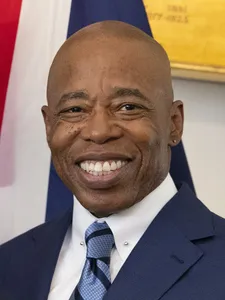
Shortly after losing his campaign for re-election as mayor of New York City, Eric Adams announced he would be launching "NYC Token". He's pitched the project as a fundraising tool to fight "antisemitism" and "anti-Americanism", and as a project to "teach our children how to embrace the blockchain technology."
He launched the project on January 12, and buyers piled in in hopes of being early to a high-profile crypto token endorsed by a public figure. However, within hours, the team began pulling liquidity as the price peaked, extracting around $2.5 million. As the price began to fall, the team added back around $1.5 million, leaving around $1 million unaccounted for.
Additionally, on-chain researchers observed at least one wallet that spent almost $750,000 to purchase around 1.5 million $NYC around 10 minutes before the token was publicly announced, leading to speculation around insider trading. However, because of the token price crash after the team began pulling liquidity, the apparent insider ultimately lost around $500,000.
People were quick to accuse Adams, or his unidentified crypto team, of rug-pulling buyers. Adams and the project's social media account have claimed that the team was simply moving or "rebalanc[ing]" liquidity, though they have not yet offered any explanation as to where the missing $1 million went.
- Tweet by RuneCrypto_ [archive]
- Tweet thread by Bubblemaps [archive]
- Tweet by NYC Token [archive]
- Tweet thread by Bubblemaps [archive]
- Wallet on Solscan [archive]
- "Pitching Crypto and Needling Mamdani: Adams’s Post-Mayoralty Takes Shape", New York Times [archive]
- "Former 'bitcoin mayor' Eric Adams faces $3 million rugpull allegation after issuing NYC Token", CoinDesk [archive]
Crypto holder loses $283 million to scammer impersonating wallet support
A crypto holder has lost $282 million in bitcoin and litecoin after a scammer impersonating a customer support employee for the Trezor hardware wallet manufacturer successfully convinced them into revealing their seed phrase. After gaining access to the assets, they quickly swapped them to the Monero privacycoin. The volume of assets was so large that the Monero price spiked as the scammer laundered the finds. The scammer also swapped assets using the THORChain project, which boasted on social media about the "World record speedrun. ⚡️" (presumably without realizing they were bragging about a thief using their project to launder money).
Around $700,000 of the stolen assets were frozen thanks to intervention by a security firm called ZeroShadow, although this represents only 0.2% of the total loss.
Truebit exploited for over $26 million

A bug in a smart contract belonging to the Ethereum-based Truebit project allowed an attacker to steal 8,535 ETH (~$26.4 million). The thief targeted one of the project's older contracts — deployed in 2021 — which contained a bug in which the price calculation to mint sufficiently large quantities of the protocol's TRU token would overflow, erroneously allowing people to mint large amounts of TRU for next to nothing. The exploiter took advantage of this by minting TRU and swapping it for ETH, ultimately causing the TRU token price to crash 99.9%. Another subsequent attack saw around $300,000 more drained from the project.
Truebit acknowledged the hack and urged users not to interact with the vulnerable smart contract.
Unleash Protocol exploited for $3.9 million

Unleash Protocol, a project promising to allow creators to register their intellectual property on the blockchain, has been exploited for around $3.9 million. An attacker was able to gain administrative access, despite the project's governance system ostensibly being protected by a multisignature wallet. They then deployed a new smart contract, which allowed them to siphon assets from the project. The attacker then bridged the funds to ETH and laundered them via the Tornado Cash cryptocurrency mixer.
Flow blockchain exploited for $3.9 million

The Flow blockchain suffered an exploit in which an attacker was able to mint a large number of wrapped FLOW tokens, which they then swapped to tokens on other blockchains. Ultimately around $3.9 million was stolen, and the FLOW token dramatically plunged in price.
Some crypto exchanges, such as Upbit and Bithumb, halted withdrawals and deposits for FLOW after the exploit was discovered. Flow later confirmed the exploit, and said that validators "executed a coordinated halt" of the network to shut down the attack.
Binance's Trust Wallet extension hacked; users lose $7 million

The Trust Wallet Chrome extension was compromised in an apparent supply chain attack. People who used the non-custodial wallet extension after it updated to version 2.68 lost funds after malicious code was introduced to exfiltrate wallet seed phrases so that the attackers could then drain the wallets. Victims have lost a combined $7 million due to the compromise.
Binance founder Changpeng Zhao — who supposedly has no managerial role at Binance after he and the company were criminally charged in the US — announced that Binance would reimburse users who lost funds.
Crypto trader loses $50 million to address poisoning attack
A crypto trader lost almost $50 million in the Tether stablecoin after falling victim to an address poisoning attack. Because blockchain wallet addresses are long, random alphanumeric strings, traders often use the first and/or last several characters to quickly recognize wallets, and copy and paste regularly used wallet addresses from their transaction history. This has given rise to a type of scam known as "address poisoning", where scammers generate wallet addresses that share similar beginning and end characters, and use them to send transactions to wealthy victims. If they're lucky, as they were in this case, the victim will accidentally copy the similar looking scammer's wallet address when making a transfer of significant size.
After the theft, the victim sent an on-chain message to the scammer, offering a $1 million "bounty" for the return of the remaining funds. They threatened, "We have officially filed a criminal case. With the assistance of law enforcement, cybersecurity agencies, and multiple blockchain protocols, we have already gathered substantial and actionable intelligence regarding your activities." However, there's been no activity from the wallet since the message, and the thief had long since begun laundering the funds via Tornado Cash.
- Thief wallet, Etherscan [archive]
- On-chain message, Etherscan
Yearn Finance suffers fourth exploit only weeks after third

Only weeks after losing $6.6 million to an infinite mint exploit, a Yearn Finance smart contract has again been exploited, allowing an attacker to make off with around 103 ETH (~$300,000). The affected contract is a legacy contract that was part of the Yearn v1 project (once known as iearn). The attacker used a flash loan to manipulate the price of tokens in the vault, allowing them to withdraw the iearn assets, which they then swapped for ETH.
This is Yearn's fourth hack, following the $6.6 million theft in November, an $11 million exploit in 2023, and an $11 million exploit in 2021. Yearn also lost around $1.4 million in 2023 in connection to the Euler Finance attack.
Ribbon Finance suffers $2.7 million exploit, plans to use "dormant" users' funds to repay active users

Ribbon Finance, which has partially rebranded to Aevo, has lost $2.7 million after attackers exploited a vulnerability in the smart contract for legacy Ribbon vaults that enabled them to manipulate oracle prices and withdraw a large amount of ETH and USDC.
Ribbon has announced it will cover $400,000 of the lost funds with its own assets. However, Ribbon is also offering users a lower-than-expected haircut on their assets by assuming that some of the largest affected accounts will not withdraw their assets, having been dormant for several years. While this plan may benefit active users, it seems like it could get very messy if those dormant users do wish to withdraw their assets and discover they've been used to pay others.
Binance employee suspended after launching a token and promoting it with company accounts

Binance has announced that the company has suspended an employee who used the platform's official Twitter accounts to promote a memecoin they had launched. The token, called "year of the yellow fruit", pumped in price after official Binance accounts coaxed followers to "harvest abundantly".
Binance publicly acknowledged that an employee had been suspended for misconduct over the incident. "These actions constitute abuse of their position for personal gain and violate our policies and code of professional conduct," Binance tweeted from its BinanceFutures account. After this announcement, the memecoin token price spiked even further.
Earlier this year, Binance fired another employee after discovering they had used inside information to profit from a token sale event.
Prysm consensus client bug causes Ethereum validators to lose over $1 million

Ethereum validators running the Prysm consensus client lost around 382 ETH ($1.18 million) after a bug resulted in delays that caused validators to miss blocks and attestations. Though the bug had been introduced around a month prior, it did not affect validators until Ethereum completed its "Fusaka" network update on December 3. Around 19% of Ethereum validators use the Prysm consensus client, which is developed by Offchain Labs.
- "Fusaka Mainnet Prysm Incident", Prysm
- Client Distribution, Clientdiversity.org
Yearn Finance hacked for the third time
Yearn Finance, a defi yield protocol, has suffered another hack. The exploiter took advantage of bugs in the project's smart contract to drain assets from several of its pools by minting a huge number of yETH tokens and then withdrawing the corresponding asset in the pools.
$2.4 million of the stolen assets, which were denominated in pxETH, a liquid staking token issued by Redacted Cartel, were recovered after the issuer burned the stolen tokens and reissued them to the team's wallet — essentially, removing the tokens from the hacker's wallet. However, the hacker routed the remaining funds through the Tornado Cash cryptocurrency mixer, which makes recovery substantially more challenging.
This is the third time Yearn Finance has been hacked, following an $11 million exploit in 2023 and another $11 million exploit in 2021. Yearn also suffered around $1.4 million in losses in 2023 in connection to the Euler Finance attack.
Upbit hacked for $30 million

The Korean cryptocurrency exchange Upbit suffered a loss of around $30 million in various Solana-based assets due to a hack. Some entities have suggested that Lazarus, a North Korean state-sponsored cybercrime group, was behind the hack.
Upbit reimbursed users who had lost funds from company reserves. The exchange was able to freeze around $1.77 million of the stolen assets.
This theft occurred exactly six years after Upbit suffered a theft of 342,000 ETH (priced at around $50 million at the time).
Aerodrome and Velodrome suffer website takeovers, again

Attackers redirected users intending to visit the websites for the decentralized exchanges Aerodrome and Velodrome to their own fraudulent versions using DNS hijacking, after taking control of the websites' domains. The platforms urged users not to visit the websites as they worked to regain control.
This is the second time such an attack has happened to these same platforms, with another DNS hijacking incident occurring almost exactly two years ago. In that instance, users lost around $100,000 when submitting transactions via the scam websites.
Cardano founder calls the FBI on a user who says his AI mistake caused a chainsplit

On November 21, the Cardano blockchain suffered a major chainsplit after someone created a transaction that exploited an old bug in Cardano node software, causing the chain to split. The person who submitted the transaction fessed up on Twitter, writing, "It started off as a 'let's see if I can reproduce the bad transaction' personal challenge and then I was dumb enough to rely on AI's instructions on how to block all traffic in/out of my Linux server without properly testing it on testnet first, and then watched in horror as the last block time on explorers froze."
Charles Hoskinson, the founder of Cardano, responded with a tweet boasting about how quickly the chain recovered from the catastrophic split, then accused the person of acting maliciously. "It was absolutely personal", Hoskinson wrote, adding that the person's public version of events was merely him "trying to walk it back because he knows the FBI is already involved". Hoskinson added, "There was a premeditated attack from a disgruntled [single pool operator] who spent months in the Fake Fred discord actively looking at ways to harm the brand and reputation of IOG. He targeted my personal pool and it resulted in disruption of the entire cardano network."
Hoskinson's decision to involve the FBI horrified some onlookers, including one other engineer at the company who publicly quit after the incident. They wrote, "I've fucked up pen testing in a major way once. I've seen my colleagues do the same. I didn't realize there was a risk of getting raided by the authorities because of that + saying mean things on the Internet."
GANA Payment hacked for $3.1 million

An attacker stole approximately $3.1 million from the BNB chain-based GANA Payment project. The thief laundered about $1 million of the stolen funds through Tornado Cash shortly after. The attacker was able transfer ownership of the GANA contract to themselves, possibly after a private key leak.
The theft was first observed by crypto sleuth zachxbt. Not long after, the project acknowledged on its Twitter account that "GANA's interaction contract has been targeted by an external attack, resulting in unauthorized asset theft."
Crypto tracking platform DappRadar shuts down, citing financial woes

Amid a month of falling crypto prices, the crypto tracking platform DappRadar has announced it will be shutting down after seven years of operation. "Running a platform of this scale became financially unsustainable in the current environment," the company announced on Twitter.
The company had previously raised several rounds of financing, with a $2.3 million seed round in 2019 and a $5 million Series A in 2021.